

 Italiano
 Français
 Español
 Deutsch
 Português
 中文
 Русский
The Primicerio and the ‘primativo’
Don Francesco Filippo Indellicati (1767-1831) was the Primicerio of Gioia del Colle: a canon who led the church community as first among equals, and a keen student of botany.
At the time vines were grown haphazardly, with different varieties in the same vineyard. Indellicati noticed one that performed better than all the others:
The one best suited to the red soils, giving an early, abundant and excellent crop.Giuseppe Musci, Il Primativo di Gioia, 1919
It ripened between the end of August and the first half of September, ahead of the others. So he called it primativo, from the Latin primativus: the name that would become primaticcio and then Primitivo.
Why this vine
Primitivo buds late, and so escapes the spring frosts. It ripens early, and is harvested before the autumn rains and fogs arrive. On the red soils of the Murgia, these two qualities made the difference between a healthy harvest and a lost one.
The eight plots of contrada Liponti
After careful selection, the Primicerio propagated the vine from cuttings and planted eight plots of it at Liponti, also known as Carrara or delle Carrare, in the contrada Terzi of Gioia del Colle. It is the first single-variety Primitivo vineyard for which historical evidence exists.
From here, in the early decades of the 19th century, Primitivo spread around Gioia and the province of Bari; towards the end of the century it reached Manduria and the Taranto area, Daunia and the Matera area.
The 2004 stele
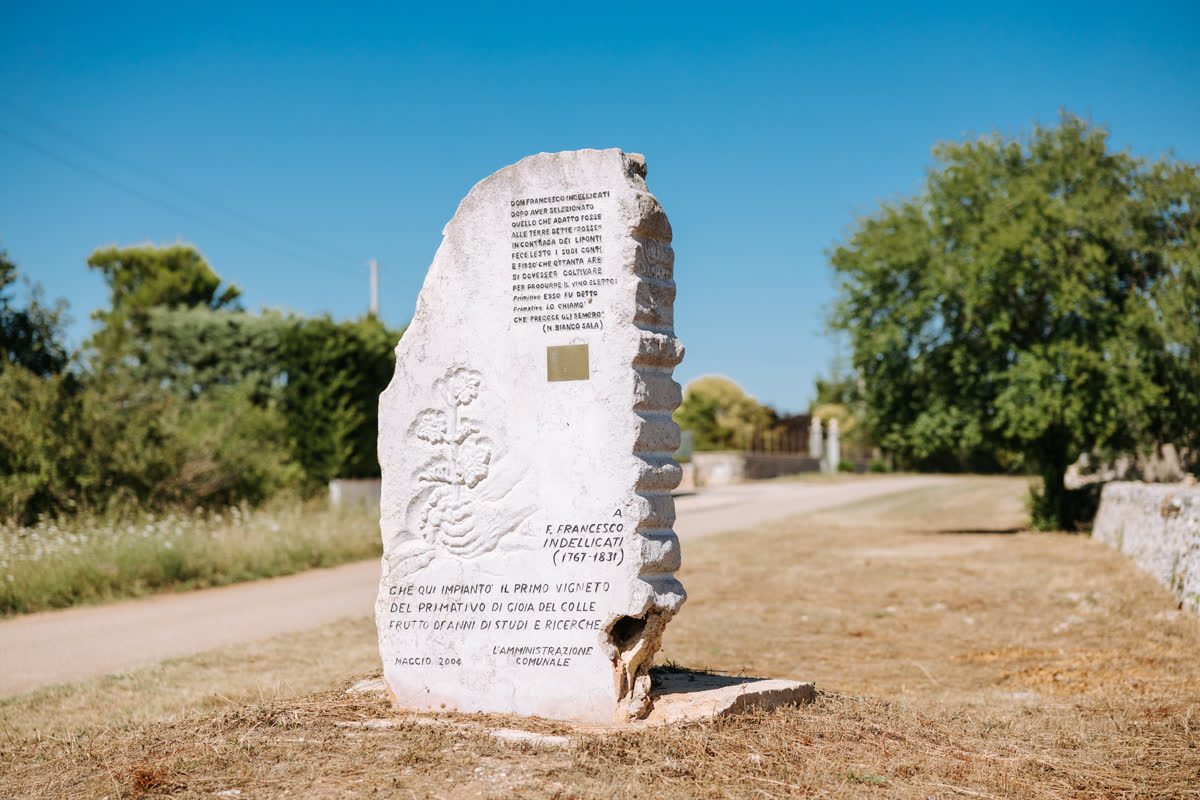
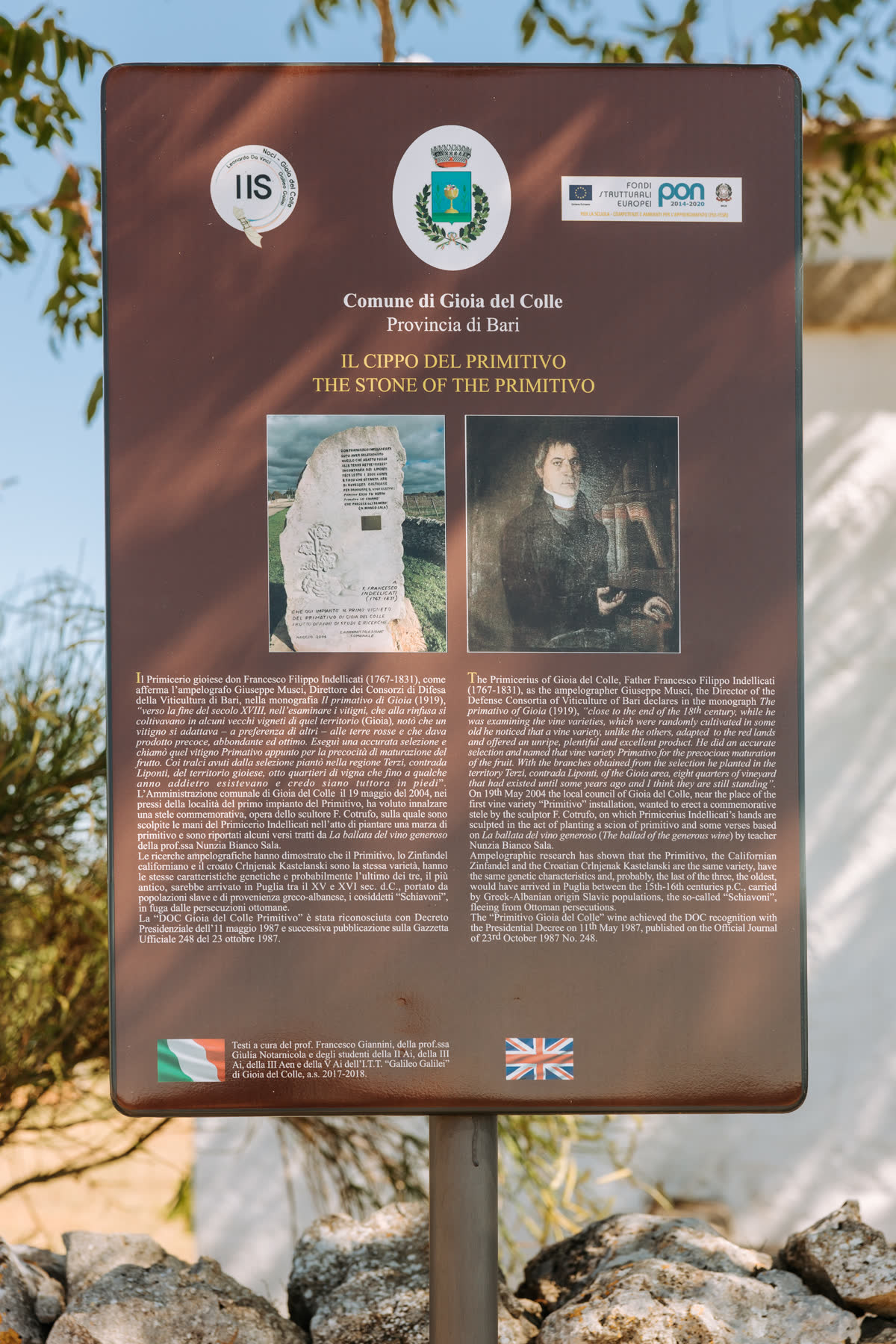
On 19 May 2004 the Municipality of Gioia del Colle placed a stone stele by the artist F. Cotrufo in contrada Liponti. On one side, a bas-relief shows the Primicerio's hands planting a Primitivo vine; on the other are carved lines from the Ballata del vino generoso by Nunzia Sala Bianco.
Today the stele welcomes everyone who enters the vineyard.
Phylloxera and the return
Between the late 19th and the mid-20th century phylloxera destroyed almost all of Italy's vineyards, and all trace of the Primicerio's vineyard was lost. The land passed to the Benagiano family, who planted a new vineyard there in the 1950s; years of neglect followed.
In 2010 Vincenzo Benagiano brought Primitivo back to contrada Liponti, using only certified rooted cuttings. Since 2018 the vineyard has belonged to his daughter Stefania, and since 2019 its wine has had a name that says it all: Nascìddò, ‘born here’ in the Gioia del Colle dialect.